Why Professional Installation Matters for Custom Paver Driveways
A custom paver driveway can make a house look sharper, more expensive, and more thoughtfully finished than almost any other exterior upgrade. It can also fail fast if the work beneath the surface is rushed. That is the part homeowners do not always see when they compare quotes for paver driveways or browse photos of decorative driveway paving online. The visible pattern matters, of course. So do driveway paver color options, texture, and border design. But the real difference between a driveway that still looks crisp in ten years and one that starts showing low spots, shifting joints, and edge failure after two rainy seasons comes down to professional installation.
I have seen beautiful driveway paving stones laid over weak base material, with almost no attention paid to drainage or driveway excavation depth. For the first few months, the result looked great. Then came tire rutting near the garage, water pooling on the driveway apron, joint erosion, and sunken driveway pavers where a delivery truck turned its wheels. The pavers were not the problem. The installation was.
That distinction matters if you are planning new driveway construction, replacing cracked concrete, or comparing pavers versus concrete driveways in Pasadena or the wider San Gabriel Valley. Professionally installed driveways cost more up front, but they usually cost much less over the life of the surface.
A paver driveway is only as strong as what is underneath it
People often talk about paver driveway durability as if it is only a product issue. They ask whether concrete driveway pavers are better than brick paver driveways, or whether natural stone driveway pavers are worth the premium. Those choices matter, but not as much as the structure below the surface.
A driveway carries concentrated loads. A parked sedan is one thing. A turning SUV, a moving truck, or a trash truck rolling over the edge of the apron is another. Vehicle rated driveway pavers and heavy duty driveway pavers help, but even the best interlocking concrete paving stones will fail if the driveway subgrade preparation is poor or the compacted aggregate base is too thin.
Professional paver driveway installation starts with reading the site, not unloading materials. A good contractor looks at soil conditions, slope, drainage patterns, sun exposure, existing hardscape elevations, and how vehicles will actually use the surface. In Southern California, especially around Pasadena, warm weather can lull homeowners into thinking freeze-thaw damage is the main risk somewhere else and that installation details are less critical here. In reality, heat, dry ridgelineoutdoorliving.com paver driveway design ideas soil movement, irrigation overspray, hillside runoff, and root pressure create their own set of problems for driveway paving in warm climates.
The strongest custom paver driveways are built like a system. The visible pavers are the wearing course. Beneath them are the bedding layer, the edge restraints, the compacted aggregate base, and the prepared subgrade. If one layer is compromised, the interlocking surface starts to move.
Site preparation is where professionals earn their fee
The most common paver driveway installation mistakes happen before the first stone is laid. Homeowners rarely watch that stage closely because it looks like dirt work. It is noisy, dusty, and not very photogenic. It is also where the success of the job is decided.
Paver driveway site preparation begins with proper demolition and removal if there is an old driveway. A cracked concrete driveway replacement, for example, is not just a matter of laying driveway pavers over the slab and hoping for the best. In some retrofit situations, driveway paving over concrete can work, but only when the slab is structurally sound, drainage is resolved, and elevations allow for a proper finished height. Many existing driveways do not meet those conditions. Often, removing old driveway concrete is the better call.
Then comes excavation. Driveway excavation depth is not arbitrary. It depends on soil type, expected traffic, paver thickness, and the thickness of the base and bedding materials required. A patio and a driveway are not built to the same standard, even if they use the same paving stones. That is a mistake inexperienced installers make all the time. They treat residential driveway paving like a backyard walkway. The driveway looks fine until it begins to settle under wheel loads.
Professionals also pay attention to driveway grading before paving. A driveway needs enough slope to move water away from the house and prevent puddle formation, but not so much that it becomes awkward to walk on or hard to use. Drainage design is one of the clearest differences between bargain work and well-planned driveway paving solutions. Too little slope leads to water pooling on driveway surfaces. Too much slope can encourage erosion, wash joint sand out, and create unsafe conditions.
Here is where experience matters. If a property in Pasadena has a downward driveway leading toward the garage, the installer may need driveway drainage channels, subtle pitch changes, or a permeable paver driveway design that works with the site rather than against it. A contractor who knows Southern California paver driveways will think about driveway water runoff solutions before installation starts, not after the first heavy storm.
The base decides whether the driveway holds its shape
Ask any seasoned paving contractor where paver driveways usually fail, and the answer is boring but honest: the base. Not the pavers, not the color, not the pattern. The base.
Paver driveway base preparation is part engineering, part craft. The driveway base material must be appropriate for compaction, drainage, and load support. The subgrade has to be stable. Soft spots need correction. The aggregate base must be installed in lifts and compacted thoroughly, not dumped in all at once. The surface then has to be brought to precise grade before the paver bedding layer goes down.
This is where professional crews separate themselves from casual installers. They use the right driveway paving equipment, including plate compactors sized for the job, grading tools, cutting equipment, and in some cases rollers or specialized compaction machines for large areas. More importantly, they know how to use those tools with discipline.
A rushed crew may leave inconsistent compaction across the driveway. That often leads to uneven driveway pavers, isolated settlement, or loose driveway pavers in turning zones. Once a driveway starts moving, the interlocking system loses some of its integrity. Water enters more easily, joint material erodes, and repairs become a recurring expense.
A properly compacted aggregate base, by contrast, does the unglamorous work year after year. It spreads loads, reduces settlement, supports edge restraints, and improves paver driveway water management.
Interlock is not a buzzword, it is structural
Homeowners often use the term interlocking driveway pavers because it sounds premium, but interlock is more than a marketing phrase. It is a structural principle. Each paver transfers load to the stones around it. That load sharing is one reason concrete paver driveways can outperform plain poured surfaces in real-world residential use.
But interlocking paver installation only works when the field pattern, edge support, joint filling, and compaction are done correctly. Pattern selection matters too. A herringbone driveway paving pattern is often preferred for driveways because it resists shifting under traffic better than some simpler running bond layouts. That does not mean other patterns are wrong, only that design should follow use.
Edge restraints are another overlooked detail. Without solid paver driveway edge restraints, the outer edges begin to spread. Once that happens, joints widen, pavers shift, and the surface starts to look tired. People often blame the material when the real issue is perimeter failure.
Then comes paver driveway compaction and paver joint filling. Fine details matter here. The bedding layer must remain uniform. The pavers need to be seated correctly. Joint material, often polymeric sand, has to be worked into the joints properly. If joint sand maintenance is neglected later, movement and weed growth between driveway pavers become more likely. Good installers know that the finish pass is not cosmetic. It locks the system together.
Drainage is not optional, even in dry climates
A surprising number of driveway paver drainage problems come from the assumption that a region with long dry stretches does not need serious water planning. Anyone who has watched a Southern California downpour hit a poorly graded driveway knows how wrong that is.
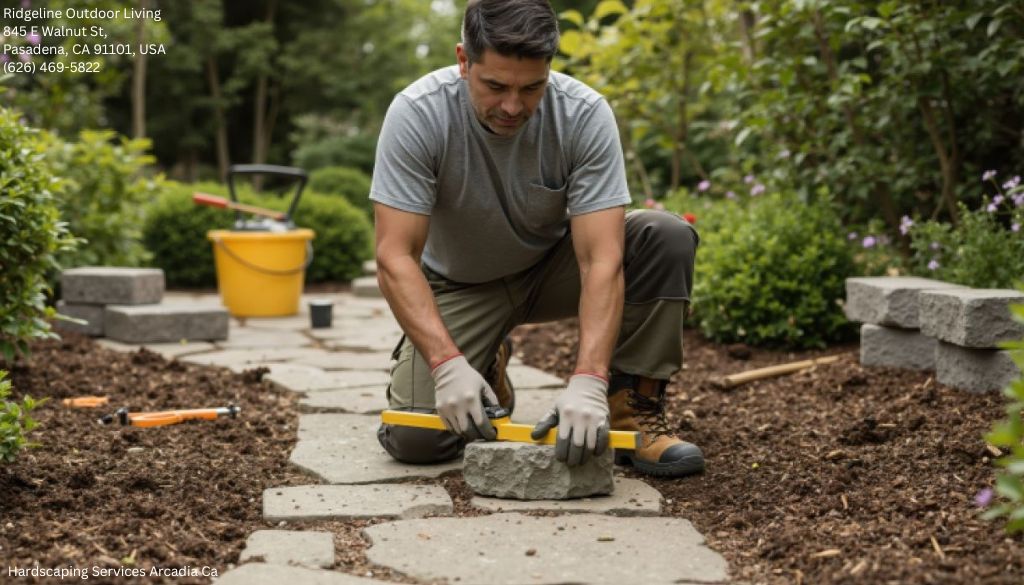
Driveway drainage design matters for two reasons. First, standing water shortens the life of the installation by weakening joints and saturating base layers. Second, bad runoff can send water toward the garage, neighboring property, planting beds, or sidewalks. That can create erosion, staining, and even foundation concerns if the site is already vulnerable.
Professionally installed driveways account for paver driveway slope, runoff direction, and soil infiltration rates. In some cases, standard pavers and traditional drainage channels are the best fit. In others, permeable concrete pavers make more sense. A permeable paver driveway can help with driveway stormwater runoff, reduce puddle formation, and support better surface water management, provided the permeable paver base layers are designed correctly.
Permeable versus standard pavers is not simply a style choice. It is a site choice. Homes with drainage challenges, wider hardscape coverage, or local runoff concerns may benefit from water permeable driveway surfaces. But permeable systems demand even more care during installation. If fines contaminate the base, if runoff from adjacent landscape areas washes sediment into the joints, or if the site is poorly detailed, the system can clog and underperform. Professional judgment matters here.
Material selection should match the job, not just the look
There is no universal best driveway paving material. There is only the best fit for the house, the site, the traffic, and the budget.
Concrete driveway pavers are popular because they offer strong compressive strength, good wear resistance, broad color and surface finish options, and reliable dimensional consistency. Brick driveway paving has a timeless look and works especially well with traditional homes, though product quality varies. Natural stone driveway pavers can look exceptional, but they require careful material selection because not every stone product is suited for vehicle loads.
Driveway paver thickness is another point where professional guidance matters. Homeowners drawn to large format driveway pavers sometimes do not realize that appearance, thickness, and structural suitability are linked. Some sleek, modern paving products look perfect in a showroom but are better suited to pedestrian spaces than to a working driveway. A professional installer will steer clients toward vehicle rated driveway pavers with appropriate thickness and proven durability.
Surface texture matters too. Textured driveway pavers and slip resistant driveway pavers can improve traction, especially on sloped properties or shaded areas where dust, leaf tannins, or occasional moss may build up. In sunny areas, lighter colors may stay more comfortable underfoot and show less fading over time. In heavily used driveways, darker tones may hide tire marks better but can show efflorescence or dust differently. These are small decisions that shape long-term satisfaction.
Cheap bids often hide expensive shortcuts
Many homeowners focus on paver driveway installation cost first, which is understandable. Residential paving is a serious investment. Depending on region, materials, site conditions, and design complexity, driveway paver cost per square foot can vary substantially. Concrete paver driveway pricing is usually higher than basic asphalt and often higher than standard poured concrete. That is the headline everyone sees.
What matters more is the driveway installation cost breakdown.
A low quote may reflect reduced excavation, thinner base material, fewer cuts, weaker edge restraints, minimal drainage work, or lower labor standards. It may also omit important elements that appear later as change orders, such as driveway excavation costs, haul-away fees, drainage installation, or subgrade correction. When homeowners compare paver driveway versus concrete cost or paver driveway versus asphalt cost, they need to compare scope, not just the final number.
The financial argument for professional installation is simple. A well-built paver driveway is easier to maintain, easier to repair in sections, and more likely to deliver strong paver driveway long term value. A badly installed one can become a repeating expense. Releveling driveway pavers, repairing joints, fixing edge failure, correcting drainage, and rebuilding failed base sections are not cheap when they happen in the first few years.
For many homes, professionally installed driveways also help with resale. Buyers notice thoughtful hardscape. They notice curb appeal. They notice whether the driveway looks finished and stable. A custom paver driveway with clean lines and sound construction often contributes more to perceived property value than a plain replacement surface.
What a skilled installer does that a casual crew often misses
The difference is not one dramatic move. It is the accumulation of disciplined decisions from the first site visit through final compaction.
- evaluates drainage, soil, traffic load, and elevation constraints before design is finalized
- excavates to a depth appropriate for driveway use, not patio use
- installs and compacts the base in controlled lifts, with attention to grade and stability
- uses proper edge restraints, joint filling, and final compaction to lock the field together
- builds for maintenance and repair access, not just for day-one appearance
Each of those steps sounds straightforward. None of them is forgiving. A small mistake early in the driveway paver installation process tends to show up later in a larger and more expensive form.
Repairs are easier when the original installation was done right
One of the real advantages of interlocking pavers versus poured concrete is repairability. If a utility trench needs to be accessed, a root lifts part of the surface, or a section settles unexpectedly, repairing interlocking driveway pavers is usually more targeted than replacing a cracked slab. That is a major reason many homeowners choose paver driveways over concrete driveways.
But repairability should not be confused with immunity to failure. If the original installation has widespread base problems, the fact that individual units can be lifted and reset does not magically make the repair small. When paver driveway base failure is systemic, repairs can turn into partial reconstruction.
The best-case repair scenario happens when a driveway was built correctly and a localized issue develops. In that case, a crew can remove a section, correct the cause, recompact, relay, and restore the surface with minimal visual disruption. That is one more reason professional installation matters from the beginning. It keeps problems isolated instead of widespread.
Maintenance stays manageable when the foundation is sound
Homeowners sometimes worry that paver driveway maintenance will be demanding. In practice, maintaining interlocking pavers is not difficult when the driveway was installed properly and drainage is working. Most routine care involves sweeping, occasional washing, stain management, and periodic joint sand attention.
Oil stains on driveway pavers should be treated promptly. Driveway paver cleaning should be firm but not destructive. Overaggressive pressure washing can remove paver driveway services pasadena joint material and shorten the life of polymeric sand. Sealing is situational, not mandatory in every case. Some homeowners like the color enhancement and stain resistance of paver driveway sealing. Others prefer the more natural weathered look and stick to cleaning and joint maintenance. A good contractor explains the trade-offs instead of selling sealing as a cure-all.
Poorly installed driveways need more attention because the surface is already fighting movement, drainage issues, or joint erosion. What should be normal long term driveway paver upkeep becomes an ongoing attempt to manage symptoms.
Design freedom is valuable, but structure has to lead
One reason custom paver driveways are so appealing is the design range. You can create clean modern driveway paving with large format units and tight borders, or a more traditional look with brick paver driveways, contrasting bands, and smaller format paving stones. Driveway paver layout ideas can be tailored to Mediterranean homes, Craftsman homes, contemporary builds, and just about anything in between.
In Pasadena driveway design, where architecture varies block by block, that flexibility matters. Decorative driveway entrances, subtle border accents, and driveway paving curb appeal all carry weight in neighborhoods where exterior detail is noticed. Yet the strongest visual results usually come from restraint and sound construction, not from trying to force too many colors or patterns into one field.
Professionals know how to balance aesthetics with structural logic. They understand which driveway paver pattern is strongest, where cuts should land, how to integrate aprons and walkways, and how to make the paving relate to the home rather than compete with it. That kind of judgment is hard to fake.
Questions worth asking before you hire anyone
If you are getting driveway paving estimates, listen closely to how the contractor talks about the unseen parts of the job. The right conversation should cover site preparation, grading and drainage, base thickness, compaction methods, edge restraints, joint material, and the expected driveway paver installation timeline. If the pitch focuses almost entirely on style, color, and a low square-foot price, you are not hearing the whole story.
A few simple questions can reveal a lot.
- How deep will you excavate, and how do you determine that depth for this site?
- What base material will you use, and how will it be compacted?
- How will you handle water runoff, especially near the garage and street connection?
- Which pavers are rated for vehicle traffic, and why do you recommend that thickness?
- What maintenance should I expect in the first year and after that?
Strong residential paving contractors answer those questions directly. They do not get paver driveway installation service ridgelineoutdoorliving.com vague when you ask about base preparation or drainage. They do not dodge details with general promises about craftsmanship.
The part homeowners remember later
Most driveway disappointments do not happen on install day. They happen later, when the honeymoon period is over and the surface starts revealing whether it was built well. You notice the wheel path that dips slightly after a wet winter. The joint line that keeps losing sand. The edge near the planting bed that begins to separate. The apron that holds water. The patchwork repair that never quite blends because too much of the original work was wrong.
By contrast, a professionally installed driveway tends to disappear into daily life, which is exactly what good construction should do. It supports cars without complaint. It drains properly. It stays level. It cleans up well. It continues to frame the house and improve curb appeal without asking for constant attention.
That is why professional installation matters for custom paver driveways. The visible surface may sell the project, but the invisible workmanship determines whether the driveway remains an asset or turns into a lesson in false economy. For homeowners investing in residential driveway paving, especially in places like Pasadena and the San Gabriel Valley where design expectations are high and site conditions vary, the smartest money is usually spent below the surface first.